%20scale(1)'%3e%3cpath%20d='M42%2024%20L78%2024%20L98%208%20L104%2042%20L104%2070%20Q104%2094%2080%2094%20L46%2094%20L20%20112%20L26%2090%20Q16%2084%2016%2068%20L16%2042%20L22%208%20Z'%20fill='%2315293D'%20stroke='%2315293D'%20stroke-width='8'%20stroke-linejoin='round'/%3e%3ccircle%20cx='43'%20cy='55'%20r='17'%20fill='%23FFFFFF'/%3e%3ccircle%20cx='77'%20cy='55'%20r='17'%20fill='%23FFFFFF'/%3e%3ccircle%20cx='45'%20cy='56'%20r='11'%20fill='%23F4A62A'/%3e%3ccircle%20cx='75'%20cy='56'%20r='11'%20fill='%23F4A62A'/%3e%3ccircle%20cx='46'%20cy='56'%20r='5.5'%20fill='%2315293D'/%3e%3ccircle%20cx='74'%20cy='56'%20r='5.5'%20fill='%2315293D'/%3e%3cpath%20d='M54%2072%20L66%2072%20L60%2082%20Z'%20fill='%23F4A62A'%20stroke='%23F4A62A'%20stroke-width='3'%20stroke-linejoin='round'/%3e%3c/g%3e%3cg%20transform='translate(156%20107.3)'%3e%3cpath%20d='M22.30%200L6.20%200L6.20-72L22.30-72L22.30-55.50Q22.30-53.50%2022.15-51.35Q22-49.20%2021.65-46.95Q21.30-44.70%2020.95-42.40Q20.60-40.10%2020.10-37.90L22.50-37.90Q23.90-42.80%2026-46.45Q28.10-50.10%2031.50-52.15Q34.90-54.20%2040.20-54.20Q49.60-54.20%2054.25-47.65Q58.90-41.10%2058.90-27.50L58.90%200L42.70%200L42.70-24.80Q42.70-32.90%2040.35-36.95Q38-41%2033.20-41Q29.50-41%2027.10-38.70Q24.70-36.40%2023.50-32.55Q22.30-28.70%2022.30-24M91.30%201.40Q83.30%201.40%2077.15-1.70Q71-4.80%2067.50-11Q64-17.20%2064-26.50Q64-35.80%2067.50-41.95Q71-48.10%2077.20-51.15Q83.40-54.20%2091.40-54.20Q99.40-54.20%20105.60-51.10Q111.80-48%20115.30-41.85Q118.80-35.70%20118.80-26.40Q118.80-16.90%20115.20-10.70Q111.60-4.50%20105.35-1.55Q99.10%201.40%2091.30%201.40M91.80-10.30Q95.40-10.30%2097.80-11.95Q100.20-13.60%20101.40-17Q102.60-20.40%20102.60-25.40Q102.60-30.70%20101.30-34.35Q100-38%2097.45-39.95Q94.90-41.90%2090.90-41.90Q87.50-41.90%2085.05-40.25Q82.60-38.60%2081.40-35.20Q80.20-31.80%2080.20-26.70Q80.20-18.50%2083.25-14.40Q86.30-10.30%2091.80-10.30M149%201.40Q141%201.40%20134.85-1.70Q128.70-4.80%20125.20-11Q121.70-17.20%20121.70-26.50Q121.70-35.80%20125.20-41.95Q128.70-48.10%20134.90-51.15Q141.10-54.20%20149.10-54.20Q157.10-54.20%20163.30-51.10Q169.50-48%20173-41.85Q176.50-35.70%20176.50-26.40Q176.50-16.90%20172.90-10.70Q169.30-4.50%20163.05-1.55Q156.80%201.40%20149%201.40M149.50-10.30Q153.10-10.30%20155.50-11.95Q157.90-13.60%20159.10-17Q160.30-20.40%20160.30-25.40Q160.30-30.70%20159-34.35Q157.70-38%20155.15-39.95Q152.60-41.90%20148.60-41.90Q145.20-41.90%20142.75-40.25Q140.30-38.60%20139.10-35.20Q137.90-31.80%20137.90-26.70Q137.90-18.50%20140.95-14.40Q144-10.30%20149.50-10.30M203%201.30Q193.70%201.30%20189.30-3.65Q184.90-8.60%20184.90-19.50L184.90-40.20L177.40-40.20L177.70-52.70L183.10-52.70Q186.30-52.80%20187.95-53.70Q189.60-54.60%20190-57.10L191.30-64.50L200.40-64.50L200.40-52.80L213.10-52.80L213.10-39.70L200.40-39.70L200.40-20.20Q200.40-16.80%20202.05-15.20Q203.70-13.60%20207.10-13.60Q209-13.60%20210.70-14Q212.40-14.40%20213.50-15.10L213.50-0.20Q210.30%200.80%20207.65%201.05Q205%201.30%20203%201.30'%20fill='%2315293D'/%3e%3cpath%20d='M247.30%200L220.20%200L220.20-66L244.20-66Q256.50-66%20264.30-62.10Q272.10-58.20%20275.70-50.95Q279.30-43.70%20279.30-33.60Q279.30-25.80%20277.45-20.10Q275.60-14.40%20272.40-10.55Q269.20-6.70%20265.05-4.35Q260.90-2%20256.35-1Q251.80%200%20247.30%200M244.80-53L236.30-53L236.30-13L246.80-13Q252-13%20255.50-15.20Q259-17.40%20260.75-21.80Q262.50-26.20%20262.50-32.80Q262.50-38.10%20261.40-41.90Q260.30-45.70%20258.15-48.15Q256-50.60%20252.65-51.80Q249.30-53%20244.80-53M302.20%200L287.20%200L287.20-66L311.30-66L328.50-18.50L329-18.50L345.80-66L368.80-66L368.80%200L353.60%200L354.50-49.60L353.40-49.60L334.30%200L321.10%200L302.40-49.60L301.30-49.60'%20fill='%23C97F0A'/%3e%3c/g%3e%3c/svg%3e)
How to build a LinkedIn outreach sequence that converts
The HootDM team · 8 min read
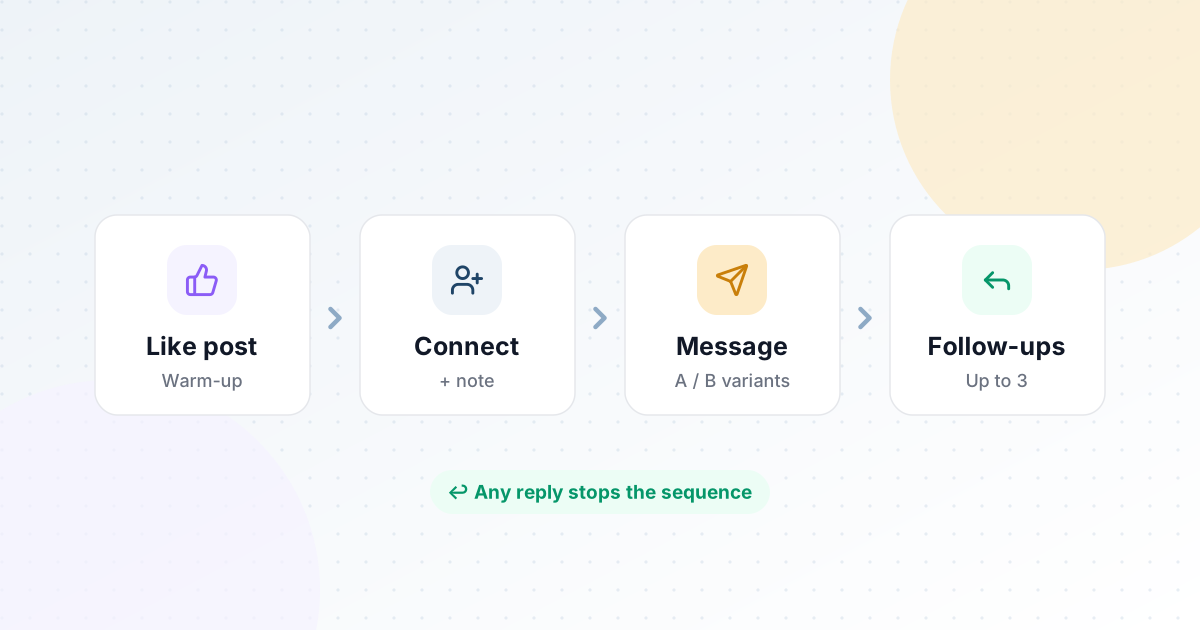
A LinkedIn outreach sequence is the ordered set of touches a lead moves through, from first contact to a reply. It sounds simple, and the basic shape — connect, then message — is table stakes. What actually separates a sequence that converts from one that doesn't is a handful of specific decisions most people get wrong on their first attempt.
The core shape of a sequence that works
- Optional warm-up — a low-friction first touch, like a post like, that puts your name in front of someone before you ask for anything.
- Connection request — sent with a specific, personalized reason to accept, or no note at all if you don't have a genuine one.
- Initial message — sent once the connection is accepted, not before. Messaging before acceptance either doesn't reach them or reads as pushy.
- Follow-ups — 2–3 timed follow-ups for leads who haven't replied, each adding new value rather than just repeating the ask.
Mistake 1: messaging immediately on connection
Sending your pitch the instant someone accepts your connection is one of the most common conversion killers. It signals that the connection itself was never the point — just a means to get a sales message in front of them. A short delay between acceptance and the first message, even a day or two, reads as far more natural than an instant, obviously automated follow-up.
Mistake 2: one message, no follow-up plan
Most replies in outbound sequences come from follow-ups, not the initial message — people are busy, and a first message is easy to miss or deprioritize. A sequence with no follow-up plan is leaving most of its potential replies on the table. The fix isn't sending more messages faster; it's spacing 2–3 follow-ups out over a reasonable window, each one adding a new angle rather than just repeating "just following up."
Mistake 3: treating every lead as equally warm
A lead sourced from a post they engaged with and a lead sourced from a cold search filter aren't in the same position when they receive your first message, even if the sequence structure is identical. The step order can stay the same, but the framing — how much context you assume, how direct you can be — should account for how warm the lead actually is going in.
Mistake 4: no plan for leads who go quiet
Not every lead accepts, and not every accepted lead replies. Leaving those leads sitting indefinitely makes your funnel reporting useless — you can't tell an active campaign from a graveyard of stalled leads. Closing leads out automatically after a defined timeout, with a reason attached, keeps your pipeline data honest and tells you where the sequence is actually leaking.
What this looks like end to end
HootDM runs one proven step order for every campaign rather than a flexible builder, specifically because a flexible builder mostly just gives you more ways to build something that doesn't convert. Connection requests are checked for acceptance automatically, messages are gated on confirmed acceptance rather than firing blind, and leads that go quiet are closed out with a clear reason instead of sitting forever. See the full breakdown on the Campaign sequences feature page.